Skip to content
We’re facing a VUCA World. How Do We Respond?
You’ve likely felt it, as you pay attention to the world around us… things seem more unpredictable than they used to be.
Economic uncertainty, rising housing costs, political polarization, shifting policies, social isolation, technological disruption. The list seems endless. To top it off, the pace of change can feel relentless. For many people, the future feels increasingly difficult to predict and even harder to control. Leadership thinkers have a name for this reality: VUCA.
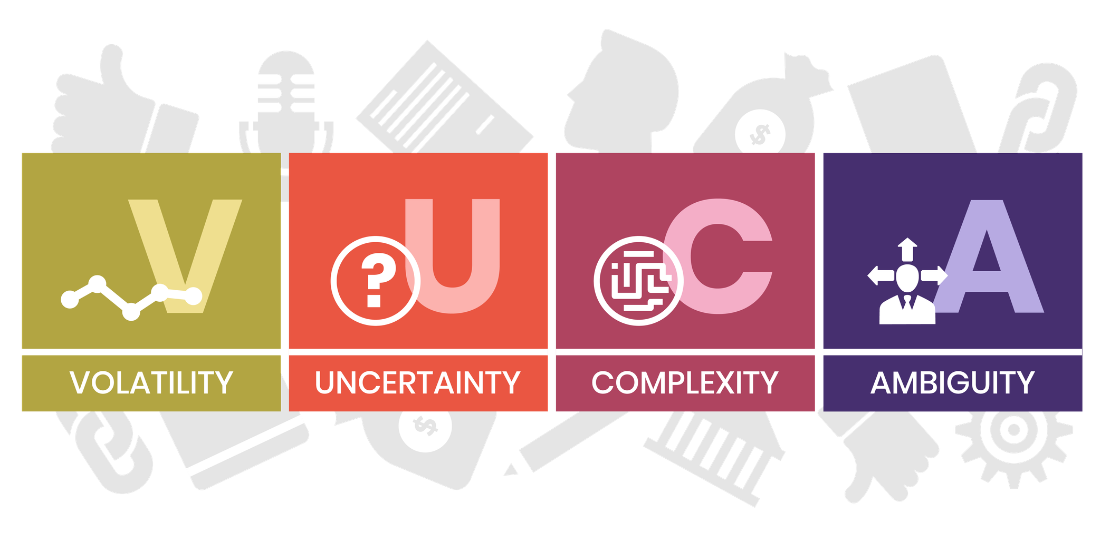
Originally developed by the U.S. Army War College after the Cold War, VUCA is an acronym that describes a world characterized by:
-
Volatility
-
Uncertainty
-
Complexity
-
Ambiguity
Volatility refers to the speed and intensity of change. Uncertainty reminds us that we often don’t know what comes next. Complexity acknowledges that most challenges are interconnected and cannot be solved through simple solutions. Ambiguity recognizes that there are many situations where the “right answer” is not immediately clear.
In many ways, communities we serve at Mile High Ministries have been navigating VUCA conditions long before that term described them. While many people had the privilege of stability, others’ lives have been tenuous all along—in ways society tries to overlook.
Families experiencing housing instability know what volatility feels like. Parents trying to provide for their children while navigating social systems understand complexity. Individuals waiting on immigration decisions live with uncertainty. Residents rebuilding their lives after trauma often face ambiguity as they discern what healing and hope look like moving forward.
(Incidentally, another acronym was coined for our increasingly fractured world in 2018, BANI: Brittle, Anxious, Nonlinear, and Incomprehensible. Yikes!)
VUCA is a daily reality for many folks, and this recognition challenges us to ask an important question:
How do we faithfully respond when the world feels increasingly uncertain?
The temptation is often to seek greater control. Ideally, we’d be able to control outcomes and have guarantees, both individually and socially. Yet much of our work has taught us that healthy transformation doesn’t happen that way.
At Mile High Ministries, we are increasingly convinced that the response to a VUCA world is deeper formation, not control. Formation work is what shapes who we are becoming when certainty is unavailable. It develops within us the capacity to remain grounded, hopeful, and present even when circumstances might be changing around us.
While strategies and programs remain an important part of our work, they are simply not enough on their own. The challenges facing our communities require people who can navigate complexity and tension with wisdom and remain committed to human flourishing even when outcomes are unclear. This conviction is deeply rooted in our faith.
Throughout the Gospels, Jesus leads people through great uncertainty. Though he doesn’t promise to remove difficult conditions, he does invite us into a community capable of navigating hard realities together. Again and again, Jesus teaches us how to move away from fear, isolation, and scarcity and instead move towards abundance together. Jesus models for us the kind of presence and trust that forms communities of belonging.
This is why paying attention to how we are being formed as humans remains central to our work. Whether through programming, staff development, or community life, we are investing in the kind of people and communities that can sustain hope in uncertain times.
If anything’s for certain, it’s that the future will continue to surprise us! Volatility, uncertainty, complexity, and ambiguity are unlikely to disappear anytime soon, but our calling to respond faithfully within it remains. Human flourishing is possible in a VUCA world. When resilient communities commit themselves to love, presence, and shared responsibility, hope can take root even in the most uncertain conditions.
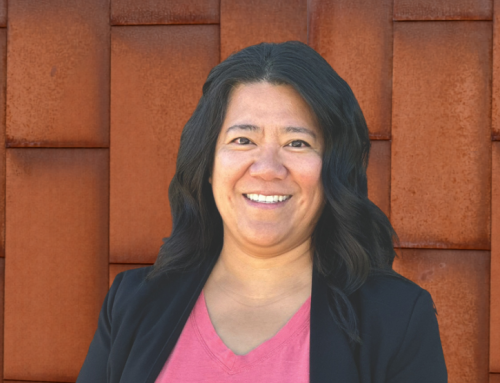
-Miriam Medina, Director of Formation

Share This Story, Choose Your Platform!
Page load link