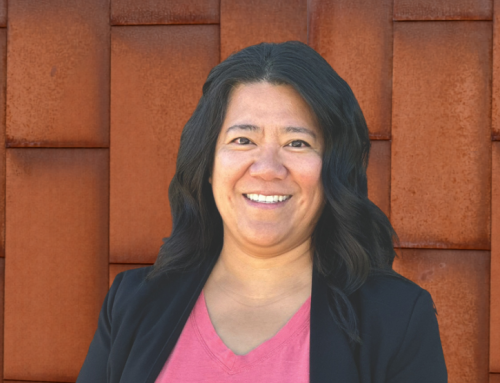
“The process of finding a therapist can be overwhelming,” says Counseling Coordinator Monica Rowell—an observation many of us might echo. “All the more when you can’t afford it. Then when you add situations of life upheaval and basic survival, it’s not likely to be accessed at all. Adults usually can’t make it happen for themselves, let alone their kids.”
Residents who arrive at Joshua Station, however, enter a community where mental health support is normalized. “Everyone is doing it!” From the youngsters to the parents. Stigmas such as “therapy is for crazy people, or non-functional people,” simply don’t hold up.
Critical for accessibility also is that services aren’t across town, requiring transportation, logistics, and extra time. Appointments are right down the hall. From the early years of Joshua Station before our program developed, we know that many people return to homelessness without help addressing these core needs. Monica takes joy in supporting those coming out of complex traumatic circumstances that are both the cause and result of homelessness.
“Our Joshua Station kids don’t even know it’s therapy, Monica laughs. “It’s fun to see how excited they are about a special time they look forward to!” A common Joshua sight is a child skipping down the hallway toward their therapist and off to the play therapy room.
For both adults and children, the counseling program at Joshua Station takes a personalized and compassionate approach to care that begins with the understanding that every individual’s story is unique. For those with a history of homelessness, conventional approaches are not always the most supportive or effective, especially for individuals navigating complex life transitions. Our counseling staff is dedicated to meeting people where they are, recognizing that each healing journey is unique and not a linear process.
Our approach starts with a trauma-informed perspective, which shifts the focus from “What’s wrong with you?” to “What happened to you?” This approach helps staff understand the profound impact of past experiences on a person’s life.
Monica emphasizes, however, that “the goal is a healing-centered approach. We focus on a person’s innate strengths and capacity for healing, not just the trauma they have experienced. We view healing as the restoration of identity and well-being, which can also include collective healing through community connection and empowerment.”
To support this, we utilize a variety of interventions that may include nature-based, art, and somatic/movement-based therapies and groups. Our play therapy sessions are further guided by Synergetic Play Therapy, which thoughtfully integrates Child-centered Play Therapy, Gestalt Play Therapy, attachment theory, neuroscience, and interpersonal neurobiology to create a safe and healing space.
As a faith-centered organization, our work is a direct expression of the life and ministry of Jesus. We are guided by his example of incarnational care, which compels us to meet people where they are, offering a compassionate presence and unwavering support. Like Jesus, we see each person as a holistic being with interconnected emotional, mental, and spiritual well-being. If it’s relevant to a client’s journey, we integrate their religious or spiritual beliefs into the therapeutic process, creating a space where faith can be a source of strength and healing.
We’re especially excited about both expansion and consolidation of our Joshua Station mental health services in the coming year. Currently services are spread out across rooms throughout our residential campus. Our growth plan—relying on generous donor support—involves relocating all services next door to our Wyandot building. “It will be just the right mix of proximity and also separation from residents’ living spaces and community life,” Monica says. “It will also create synergy and mutual support for our team working together.”
Space will be reconfigured and remodeled with a welcome area and five therapy rooms—with new equipment including for neurofeedback. Our team will continue to include interns completing their master’s degrees, as well as new full-time therapists (a bilingual therapist and eventually a substance use disorders specialist). We’ll expand hours for walk-in crisis care and greatly increase the number of people we can serve among our graduates and residents of other locations such as Clara Brown Commons.
All part of Housing That Heals.
Help us raise $150,000 for our Joshua Station families by April 9!

Please also join us and invite friends to our
Spring Into Caring Celebration Event
When: Thursday April 9, 5:15-7:00pm
Where: Mile High Ministries, 913 North Wyandot Street, Denver
What: Come enjoy hearty appetizers and beverages in a relaxed setting, with exciting program updates by staff in our Wyandot Building (located next to Joshua Station). Then we’ll go next door to Joshua Station for dessert with our wonderful residents.
RSVP by Sunday April 5:

For more information about our April 9 gathering, please call Shana at 720-756-7214.