Holy Week offers the perfect invitation for us to slow down and pay attention to the ways of Jesus.
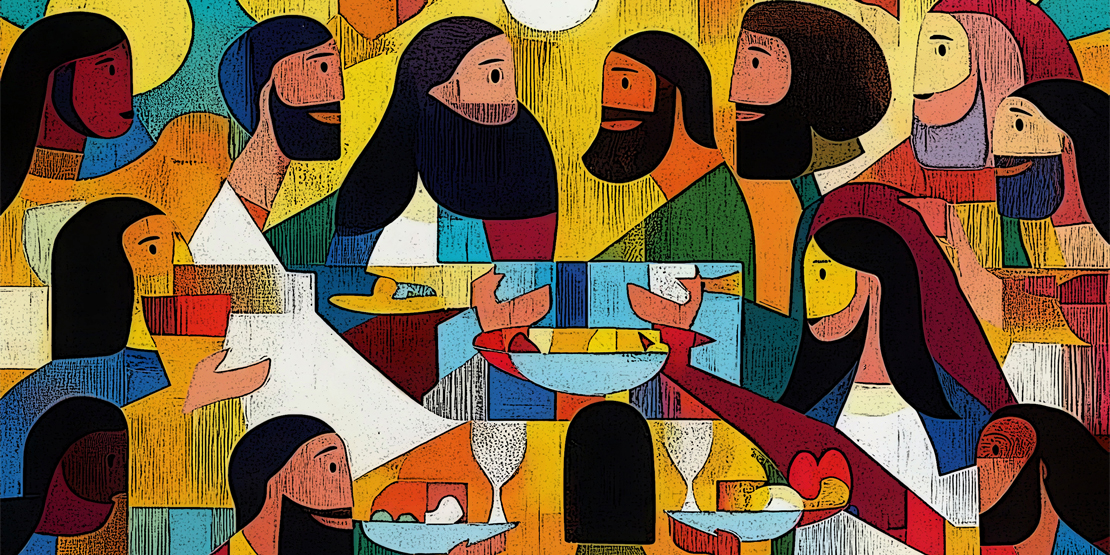
At Mile High Ministries, we’re attentive to how Jesus moved in the world, and who he drew near along the way. In Luke 22:14-23, we get a powerful glimpse into the kind of community Jesus was forming. Here, he shares one final meal with his disciples before his arrest. This meal is intimate and heavy with meaning, yet what stands out the most is who is present at the table.
Everyone is there.
The devoted, the confused, those who will fall asleep when they are asked to stay awake, those who will deny him, those who will flee… even the one who will betray him! And still, Jesus makes room. He doesn’t turn any of them away. He chooses to gather his beloved in what we know to be one of the most (if not the most) powerfully relational acts around the globe—the simple act of sharing a meal.
Unfortunately, our world is one where we constantly organize ourselves around distorted interpretations of worthiness. Belonging is often tied to performance or what someone can offer.
Instead, Jesus gathers a community that refuses those distorted categories. The table isn’t curated for the most faithful or the most “deserving.” It’s curated for all. Bread and cup are shared with people who are inconsistent, imperfect, and at times, complicit in harm. What a powerful theological reality!
The truth is that most of us would deny entrance to our dinner party to those who harm us. It’s not often that we welcome the invitation to break bread with people we don’t mess with. However, Holy Week reveals that the community Jesus forms is built on radical inclusion. He didn’t ignore harm, but he also didn’t withhold his presence. Jesus named the betrayal that was to come, he acknowledged that someone would deny him not once, but three times, and still offered himself freely: “This is my body, given for you.” Therefore, his response shouldn’t point us towards withdrawal, but rather to a deeper presence that transforms and refuses to let harm have the final word.
This kind of community feels particularly urgent in our current moment. It’s no secret that we live in a world marked by deep divisions—political, social, economic, and a host of other fault lines. It can be tempting to draw hard lines around who belongs and who doesn’t, even within communities committed to the hard and important work of justice and reconciliation. And yet, Holy Week invites us to welcome a more complex truth: the work of liberation isn’t just about dismantling systems that “other” and exclude, but also about creating and fostering communities where belonging isn’t contingent upon perfection or seeing eye-to-eye with 100% of the people, 100% of the time. That’s simply not an attainable reality. And that’s ok.
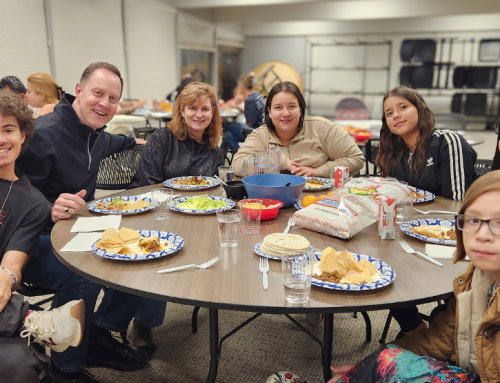
We often use the language of being a community of hope and healing at Mile High Ministries. Our work does not live in the abstract. We want these words to express how space actually is created for one another in real, imperfect, everyday life. We try to embody these aspirations by refusing to turn away when things become complicated. We hold tension, in love. Community can be messy, but the gift is in choosing to welcome others and see the mess through. Jesus’ table reminds us that belonging is something that is freely given—and in the same way, something that we are invited to extend. As this week unfolds, the invitation remains:
Where is there a call for us to make room?
Where might belonging be withheld, and what would it look like to lean toward connection instead?
How might shared tables—both literal and metaphorical—become places where the good news isn’t just spoken, but also embodied?
Because if Holy Week tells us anything it’s that even in the shadow of betrayal and death, Jesus is still setting the table. And thankfully, there is room for all of us!

Miriam Medina
Director of Formation